

№ 154
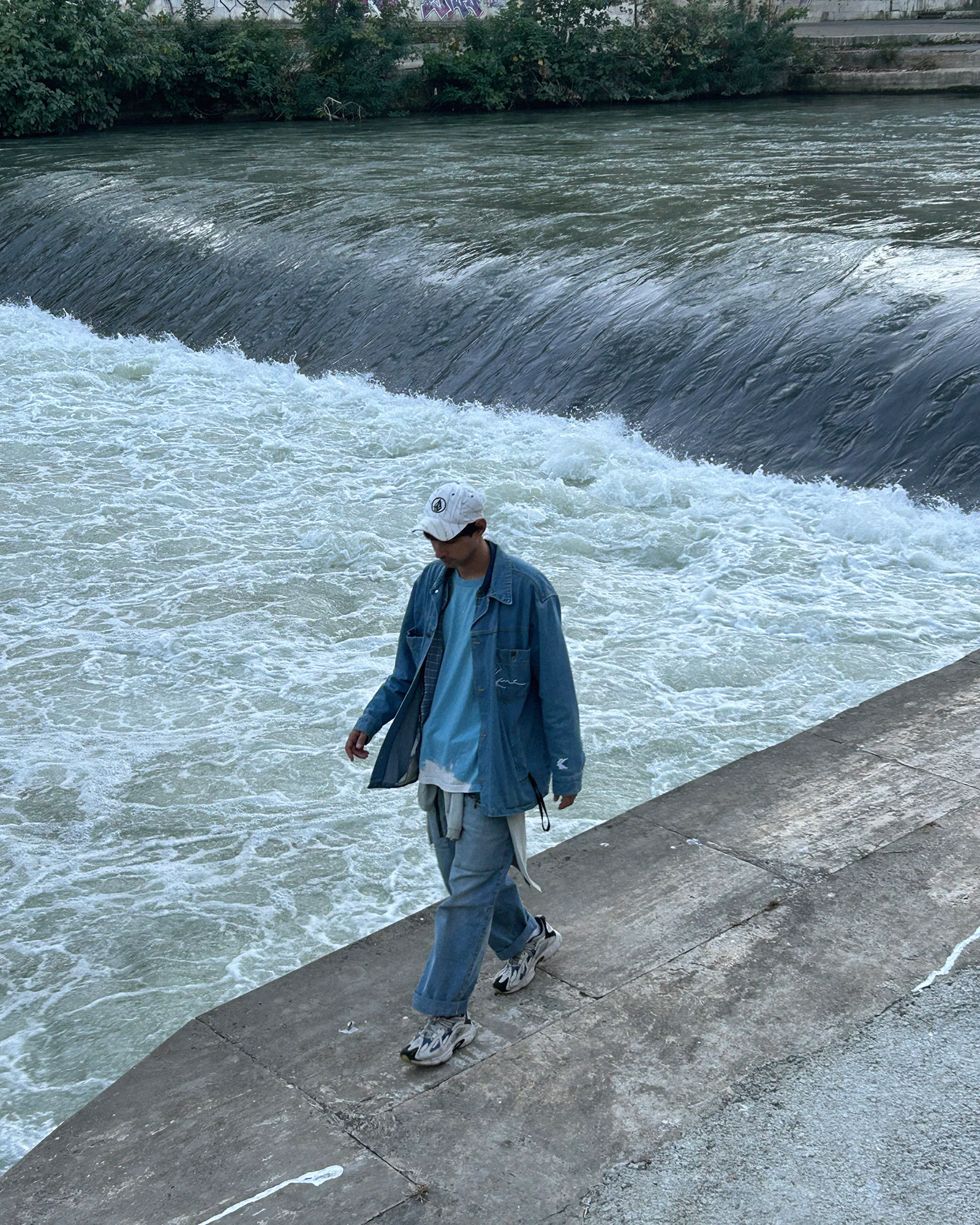
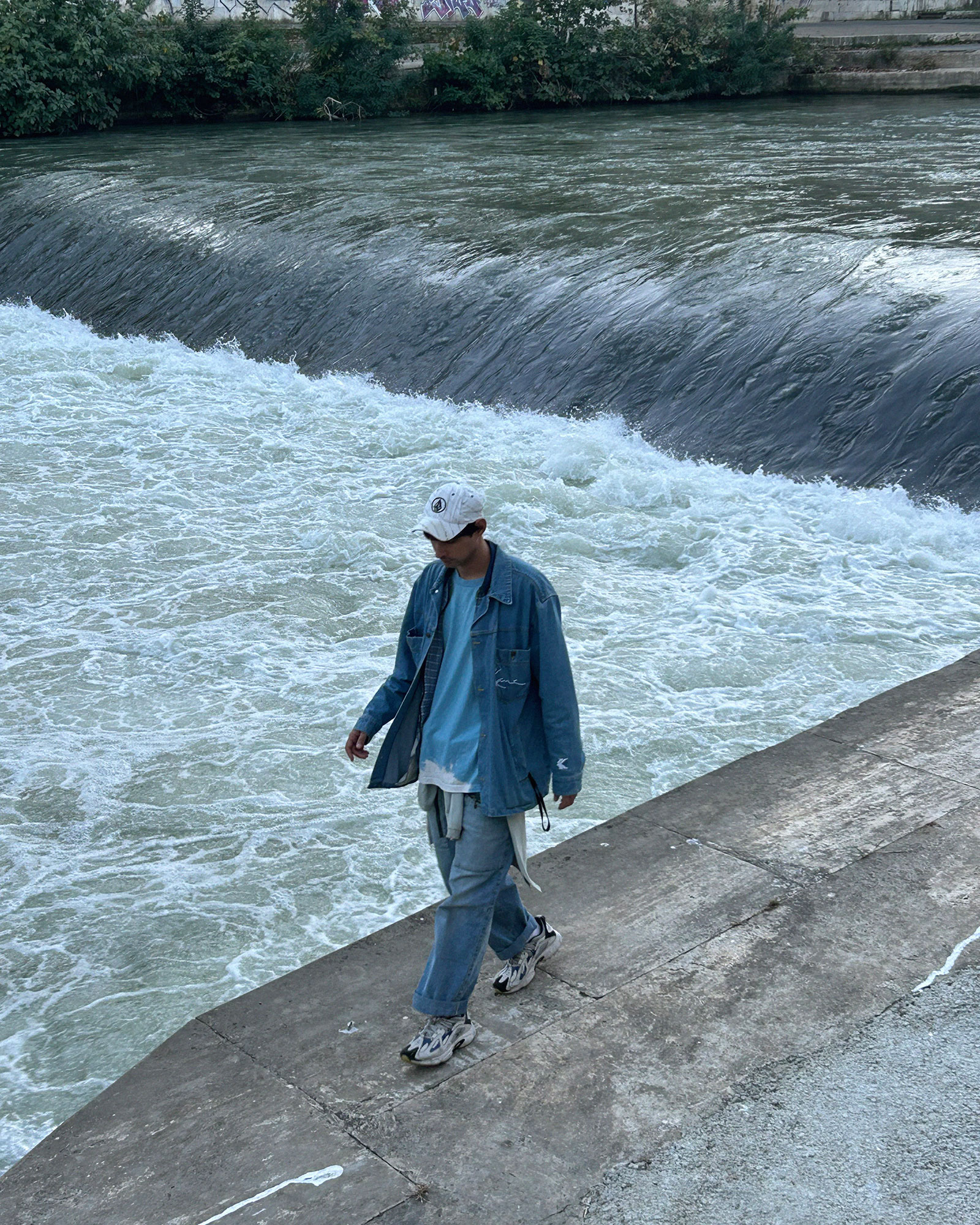
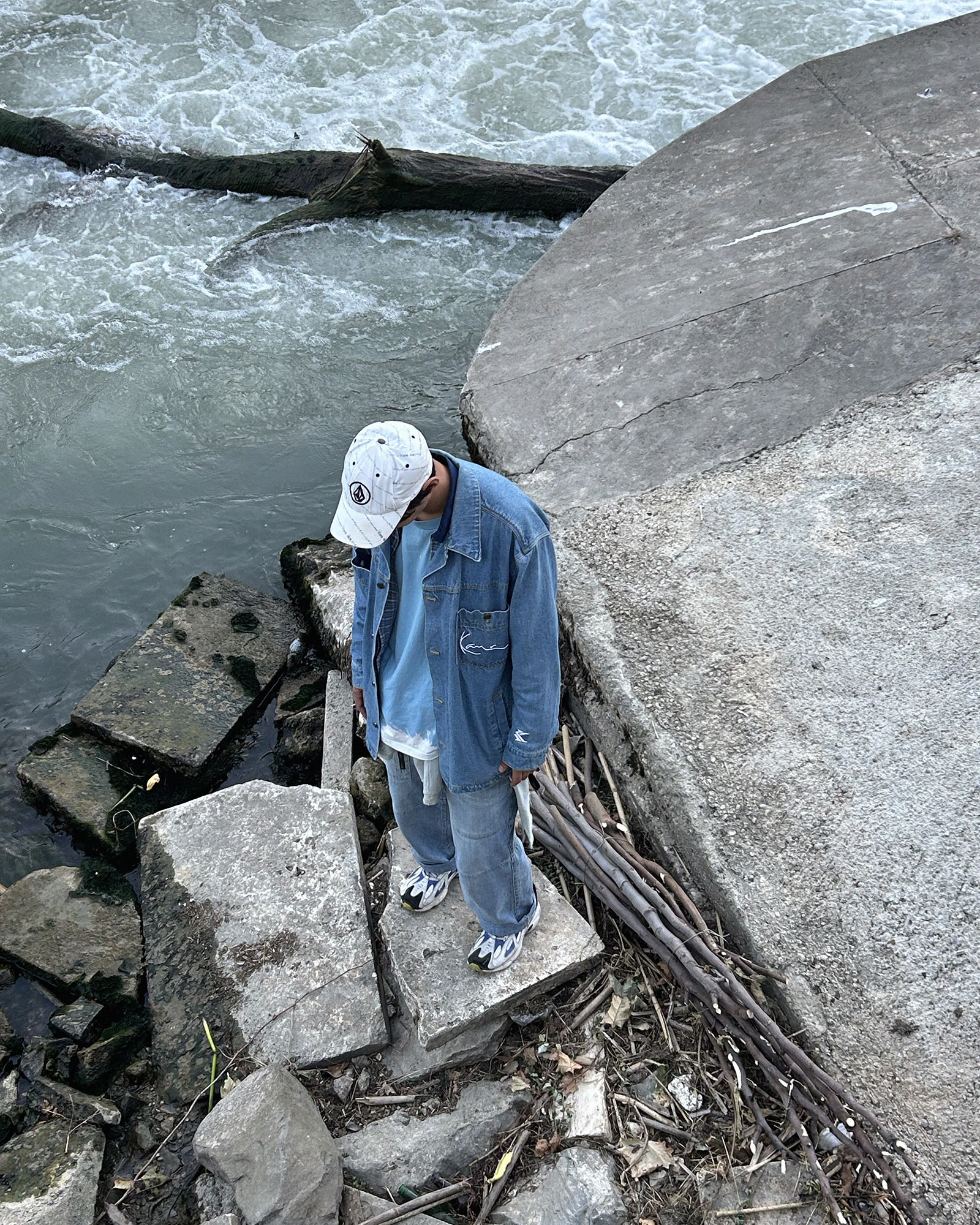
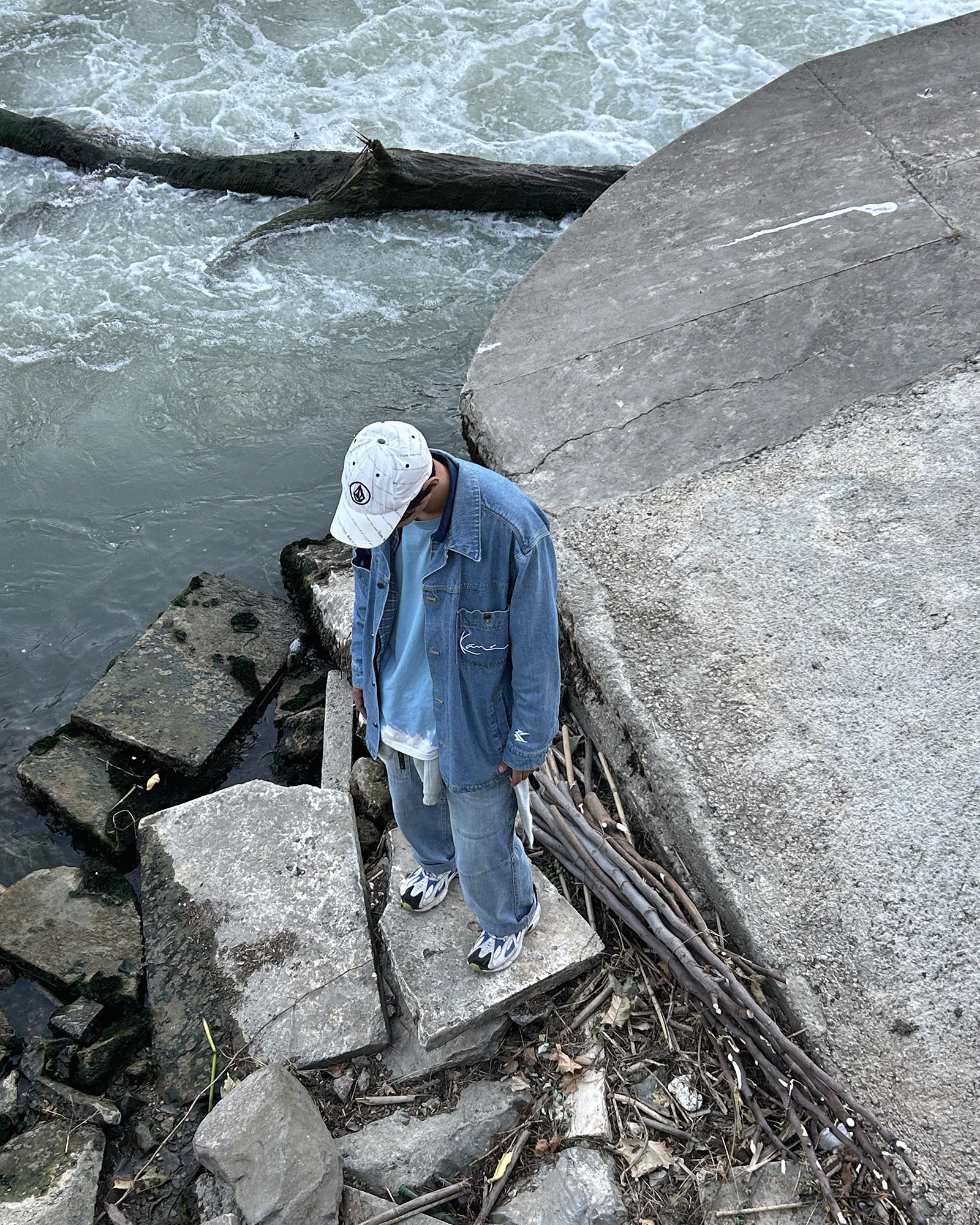
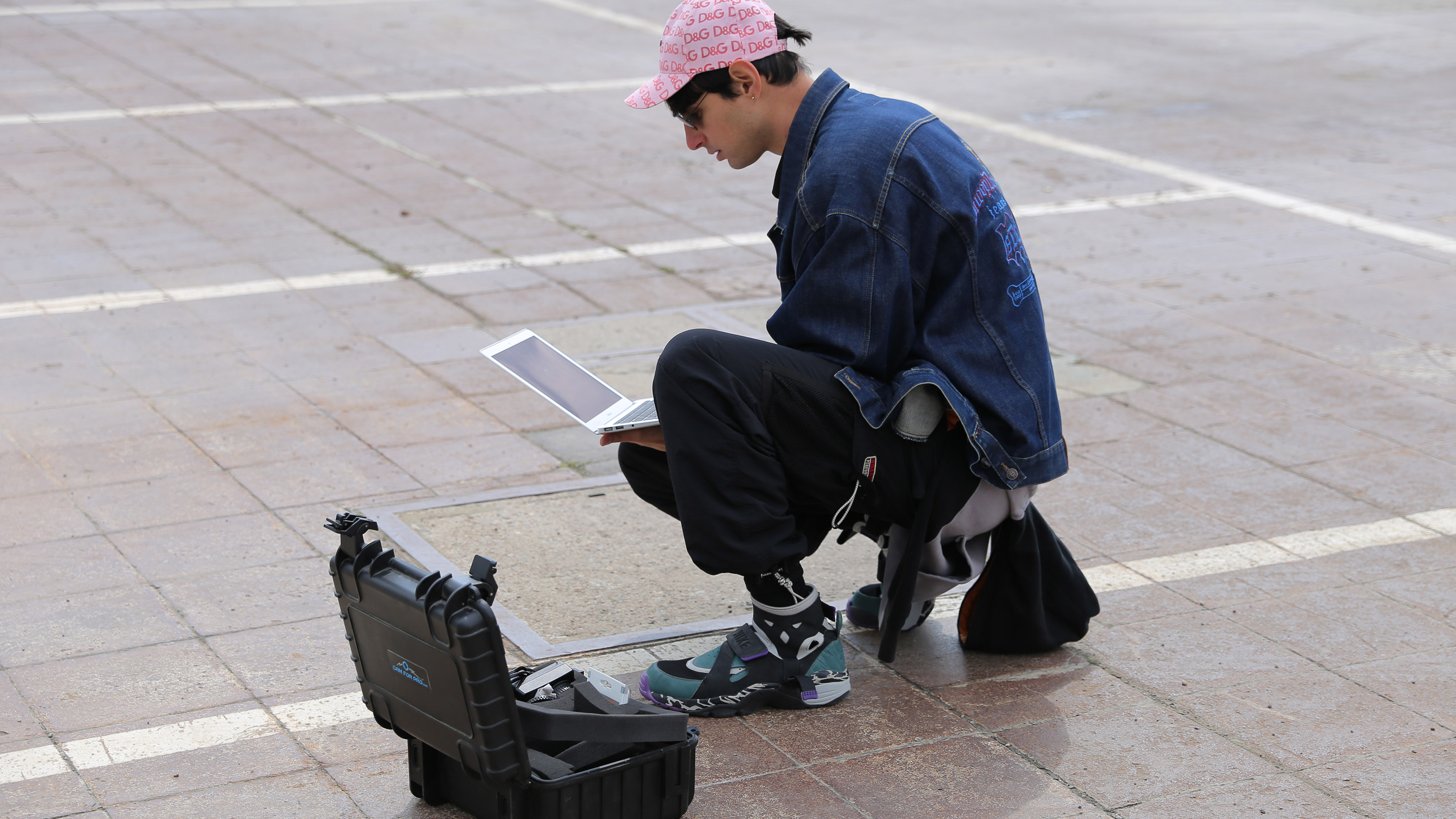
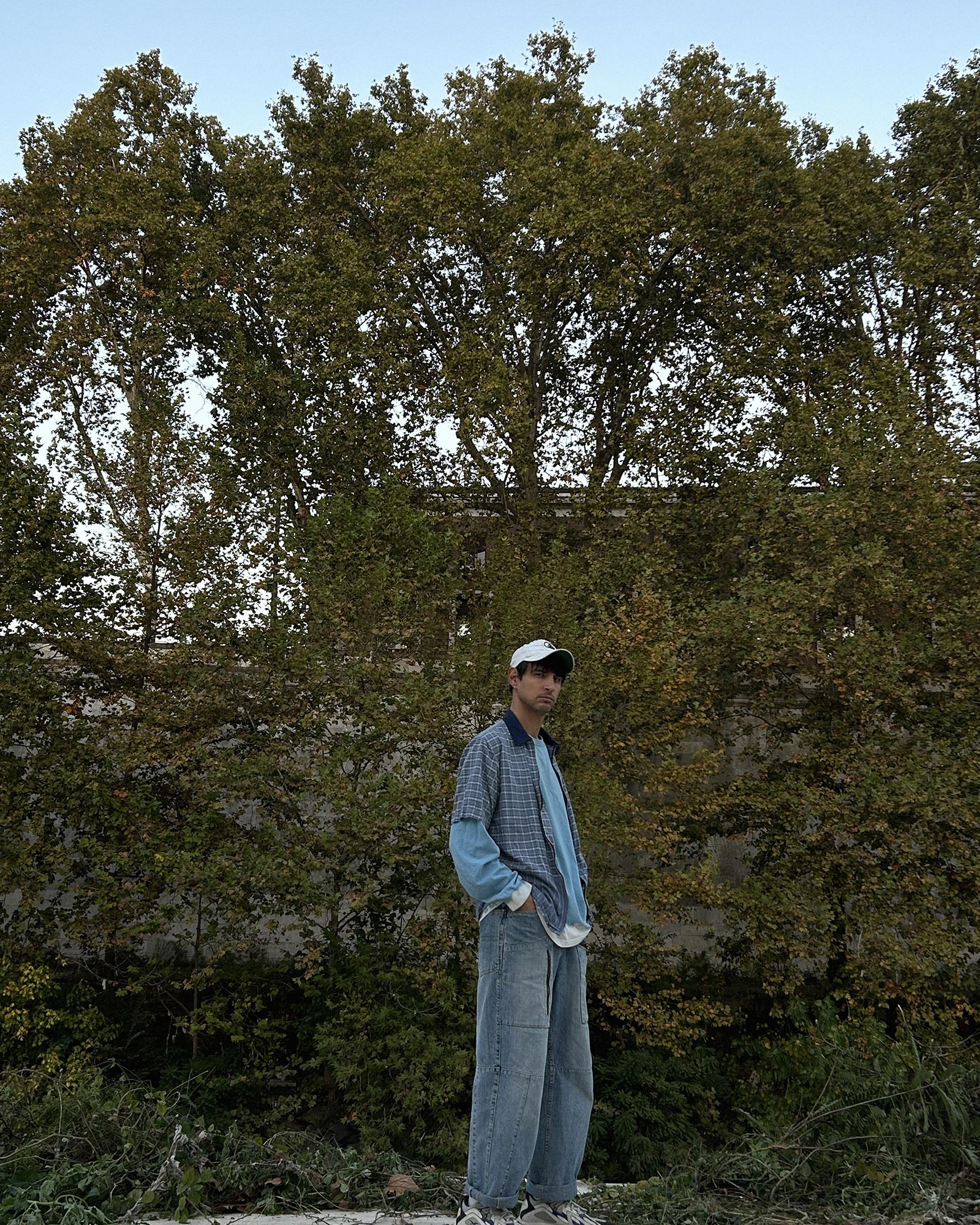
Next up at EMC is Rome-based producer, DJ, and NTS Radio host Giovanni Civitenga, aka Skyapnea, an artist who moves between the outer edges of electronic music and the unpredictable corners of club culture.
Your browser is no longer supported. For the best experience, please upgrade to the latest version of Chrome, Safari or Firefox

Next up at EMC is Rome-based producer, DJ, and NTS Radio host Giovanni Civitenga, aka Skyapnea, an artist who moves between the outer edges of electronic music and the unpredictable corners of club culture.
With a fascination for machine-made sounds and a taste for the progressive, his musical universe stretches from investigational electronics and experimental soundscapes to warped rhythms, dub mutations and leftfield dance music.
Skyapnea’s musical journey began with an early obsession with hip-hop in the mid-90s, making beats in his bedroom before discovering the more adventurous side of electronic music. Since 2014, his monthly NTS Radio show has served as an outlet for his wide-ranging curiosity. As a producer, he explores different territories through aliases as Eter Dex and Detraex Corp, as well as various collaborative projects. His latest Eter Dex album “oslas 8x”, released earlier this year on the Turin-based label Gang of Ducks, reflects his interest in rhythmically driven music that sits somewhere between adventurous club sounds and intimate headphone listening.
Whether producing, selecting records or doing radio, Skyapnea follows an instinctive approach driven by curiosity, experimentation and unexpected discoveries. For EDWIN MUSIC CHANNEL, he translated his practice into a mix, about which he reveals: “For the sake of doing something a bit different from what I usually do on the radio or live, I’ve put together a mix that is more consistent than most of my sets. I wanted to keep it dubby, quite nocturnal, with a fair amount of bass, of course, chill but a bit dark. Fingers crossed it worked.”
Alongside his futuristic dubby mix, which features tunes by artists Ben Vince, Hanne Lippard or Space Africa, we publish a talk with Skyapnea, in which he speaks about his early love for hip-hop, the ethos behind his radio work, and other ideas circling around music culture.
Q. Looking back at your earliest encounters with music, what were the sounds, environments, or experiences that shaped your musical imagination? Was there a particular moment when listening to music turned into wanting to create it yourself?
A. It was definitely hip hop for me. I must have been 12 or 13 years old, and I got totally obsessed with rap. It was the most exciting thing you could imagine, and the whole culture felt so alien. It was around ’95/’96, and I was just starting to have some sort of taste of my own. That’s what made me wanna make music. I started making beats and writing raps. It was all really naive and clumsy, but I got the bug. I just loved that you could put together sounds in your bedroom, that you could make music on your own. From then on, there hasn’t been anything else I’ve wanted to do as much.
Q. Your NTS show offers a space for musical exploration beyond the immediate expectations of a club environment. How do you approach putting together a radio show, and how does that process differ from preparing a DJ set?
A. When I started the show on NTS, I hadn’t DJed once in my life. The main formal idea was to apply the same concept as a club set, a continuous flow of music, to ambient and experimental music, creating mixes put together with a fair bit of care so that the listener would move seamlessly from one place to another. DJing came for me as a consequence of the show, and as I got more and more into it, it has in turn influenced the show, which started incorporating more and more music with rhythms in it. Of course, I try to keep at the core the idea of immersive music that I started with. A lot of stuff I like to play in a club I would never play on the show, just because I think there are plenty of shows that already do that, and however eclectic mine might be, I want it to retain a certain vibe.
As for the difference between the two, the radio has a lot more practical constraints. Most of them come from the limitations mentioned above, in terms of what I find suitable for it, and from the fact that I try never to play the same track twice. So, I basically have to make do with whatever new music I’ve accumulated in the last four weeks (which is often a lot of stuff that is too clubby for the radio), along with the little I haven’t yet played from the archive and make it all fit together. Preparing a DJ set means a lot more freedom. I just decide what vibe I wanna go for and often make a preselection of stuff to draw from. Even though I have tons of smart playlists and tagged music on my USB, I prefer to prep the equivalent of a record bag, which will make up most of what I’ll play that night. I just dislike spending the whole set navigating through endless folders and playlists. Too much choice isn’t always a good thing for me.
Q. Radio has historically been an important medium for discovering unfamiliar music and developing alternative cultural communities. What role do you think independent platforms like NTS, Kiosk or Noods Radio play today, particularly in an era dominated by streaming algorithms?
A. I’m such a fan of radio nowadays. I think the fact that we have all these independent stations, truly born out of love for music and not serving any other purpose, is astonishing. I’m sure radio was really meaningful before the advent of internet radio as well, but for me, growing up in Italy, it was never much of a resource. Nowadays I just tune in to NTS whenever and let it play, knowing that more often than not I will be pleasantly surprised. As a byproduct of listening to the radio a lot and making mixes for it, I ended up being quite a fan of hearing a track in the context of other artists’ tracks being played around it.
It’s quite different from listening to a whole album, but it absolutely has its own value, and I think it’s changed my perception of music quite a bit. It’s nice to make pieces knowing they might become part of these collages people are constantly making. I’m not sure why anyone would let an algorithm choose music for them instead of putting on a mix, but I guess it’s a matter of habit. I’m not really against technology being used like that, though. I’m mostly bothered by the fact that it’s all going through a big tech company that’s exploiting artists’ work, so even the use of algorithms to select tracks acquires a creepy vibe, and rightly so.
Q. How does your approach to producing music differ from your approach to selecting and playing it? Do you find yourself following a particular idea or concept in the studio, or do you prefer allowing accidents and experimentation to determine the outcome?
A. Selecting music is definitely an easier process than making it, but I enjoy making stuff more than looking for new music all the time. I like it, but I don’t get as excited about it as I do about actually working on my records. As for my process, I usually start with an idea that sets a particular situation. It could be as simple as recording material with a certain setup, reworking some drafts from many years ago, or simply working towards a certain sound I might be trying to achieve. Whatever it is, there is always something that identifies a set of tracks, a common method or intent. From then on, it’s a lot of trial and error to see where things might lead. The outcome needs to be something I could never have imagined when I started, so I let anything take me in all kinds of directions and fix, cut and redefine intuitively until I get somewhere satisfying… which can sometimes mean a very long gestation.
Q. Your musical interests seem to resist straightforward categorisation. How would you describe the evolution of your taste, and what continues to excite you about discovering unfamiliar sounds?
A. Looking back, I think I’ve always been mostly fascinated by music made with machines. It was hip hop first, then mainstream electronica, if we can call it that: stuff like The Chemical Brothers, Fatboy Slim, etc. Quite obviously, then came a lot of Aphex Twin, Squarepusher and all the Warp stuff. Then I really got into experimental stuff made on laptops, very abstract digital music that came from using custom software to turn the laptop into an instrument: Phonophani, Kaffe Matthews, early Leafcutter John… Anything that used Max/MSP I probably liked ;) I had a brief period of excitement about the whole LA beat scene, which lost its appeal very quickly. After that, I think my confused taste was totally saved by starting the radio show. It basically taught me about music curation, kept me in touch with current things, gave me an excuse to connect with artists I admired, and naturally exposed me to more and more music.
Everything about discovering new sounds still excites me, and there’s honestly so much I don’t know that I don’t think it will ever stop. My friends keep showing me music I’ve never heard of, stuff that’s totally brilliant and I’m not sure how I could have missed… plus every new discovery is a potential starting point for some work I wanna do. The hardest part is choosing what to focus on at a specific time, because it means some other idea must be left behind.
Q. What distinguishes your solo productions as Eter Dex or Detraex Corp from your works in groups like One For Ghost or Rain Text?
A. Well, creating music entirely by yourself has a lot to do with control. I like collaborations because I tend to give up a lot of it and adapt as much as possible to the artist I’m working with, especially someone like Giuseppe Ielasi, who has very clear ideas about what works for him and what doesn’t. It’s a huge relief not having to decide everything by yourself, but mostly it’s fascinating to see the results of such a process. If it’s done without forcing things in a certain direction, it can lead to completely unexpected results, which is always my main aim, even when working solo.
Q. Music rarely exists in isolation from other artistic disciplines. Are there particular visual artists, filmmakers, writers, or cultural movements that have profoundly influenced the way you produce and think about sound?
A. I’ve always liked Lynch’s idea of contextualising the weird with the familiar. That really stuck with me: how he could twist and distort storytelling to such a degree while creating a framework that made it work. I find that the music that manages to do that is often my favourite. It’s a fine balance, but I find it more effective than just going off on a wild tangent, at least in my work. I like a lot of stuff that is pretty radical, don’t get me wrong. Honestly, though, you probably won’t hear a record made of a single modulated sine wave from me… not yet, at least.
Q. Electronic music has become increasingly institutionalised, with major festivals, commercial partnerships, and global touring circuits. Do you think something of its original experimental or countercultural spirit has been lost, or has that spirit simply moved elsewhere?
A. I think that tons of music, electronic or not, still exists completely outside these circuits you’re referring to. It seems to me that it’s unfortunately getting harder and harder for independent spaces to survive, but there are tons of artists and promoters doing great work who have very little to do with the major circuits. I personally don’t like huge festivals where the audience is milked like a cash cow, and music is treated as just an excuse to attract people who will spend money, tricked by any means possible into doing so. I think none of this bullshit has anything to do with art, and it makes for an awful experience for everyone. That being said, these things have every right to exist, and if people enjoy that garbage idea of fun, who am I to say they shouldn’t? What I would like to see is a healthier balance between big commercial ventures and independent enterprises, which usually struggle even to find the money to pay artists decent fees and have to do miracles to pull together nights that a single overpriced flight can put at risk. Those people do amazing work and often get no help.
Q. Looking back over more than a decade of musical exploration, has your understanding of what makes music interesting changed?
A. I’ve always liked things that manage to intrigue me somehow, but I also like things that are very straight up and obvious about what they are trying to communicate. This has been the same for a long time, and I haven’t noticed it changing lately. In the last ten years, I’ve definitely become less and less patient with things that pose as something different from what they are or are sold as. I don’t like art that is dishonest or overly constructed to gain attention. I hate gimmicks, and I can’t stand watered-down stuff being sold as radical.
Q. Finally, imagine removing all professional expectations from your musical practice: no audience to satisfy, no releases to promote, no clubs to play. What kind of music would you want to make or explore, and what would you like to discover next?
A. This is already true for my musical practice. I only do what I feel like doing and play what I feel like playing. I wish it were the case for everyone else, but often real-world conditions don’t allow it. I’m lucky in that sense. I’m also absolutely not strategic about my career. I just want to make records and see what happens. Of course, I’m happy if people find out about my music or I get booked for a good gig, but it should all come because the work is good, not because of some kind of plan. I don’t want to apply certain dynamics to my artistic practice. I think it would spoil it for me.
Q. Last year you released the album “oslas 8x” under your Eter Dex alias on the Torino-based label Gang of Ducks. Can you tell us a bit about the album and what you tried to achieve with it?
A. I wanted to make an album that was very rhythmic but absolutely unclear in terms of genre. Adventurous DJs could probably play some of the tracks in a club, but I guess I made the music thinking of someone listening on headphones, which is me most of the time. The tracks that form the album were actually made a few years ago and had been sitting on my hard drive for a while. When Alessio (Capovilla) picked them for the label, I decided to freshen them up a little and added a few things here and there. I asked Franco Franco to record vocals on a track of his choice, and we did that together in Berlin. Then Vittoria Totale came to my studio and recorded a bunch of material she had written, which I ended up using on two tracks. Adding vocals was also a way for me to make the tracks feel new, which totally worked.
Q. When playing in clubs or at festivals, how much of your performance is planned and how much develops spontaneously through the atmosphere, the audience, and the space itself?
A. If it’s a short set, I’d rather plan it. If it’s longer, I prepare a few playlists that give me options and then wing it. I’ve never really believed in the whole “reading the crowd” thing. I still go and do my thing, but I do adjust the intensity of what I’m playing to the vibe.
Tracklist:
O - Kaskaat
Sabla - Punti
Aleksi Perälä - FI3AC2411604
Beppu - Structures
Francesco Skip - Everything Dubbed
Azu Tiwaline feat. Cinna Peyghamy - Magnetic Service
Leeway - 8 Bar Dub
Logos - Dust
Ploy - Bad Seed
Ben Vince - Sentient Kinetics
Anna Kost - Jaw Flex
Caveman LSD - A1
Atoloi - O 17 O 02
Demegy - Cockaigne
Zemi17 - Rangda
ffyyoo – sdg
Space Afrika - B2
ADILR - Nightshades
Dettinger - Oasis 4 (Remastered 2024)
Hanne Lippard - Every Elevator